

Best Thigh Sleeves for Chafing Prevention: What to Look For
Inner-thigh chafing can make everyday activities uncomfortable. Whether you are walking long distances, running, working out at the gym, or...

When your knees start hurting or feeling unstable, it’s easy to get confused about what to use a knee brace or a knee sleeve. And that’s where the “knee brace vs knee sleeve” debate begins. Although they sound similar, they serve different purposes. This article breaks down the key differences, how each one works, when to use them, and which one may be right for you. Let’s make it simple and clear.

The main difference lies in support level.
A knee brace provides structured support for instability or injuries, while a knee sleeve provides compression to help with mild pain and swelling. This is the core distinction in understanding knee brace and knee sleeve differences. Below, we break down each one clearly.
A knee brace is a supportive device designed with rigid or semi-rigid materials like hinges, straps, or stabilizers.
It’s mainly used to:
Support injured or unstable knees
Limit harmful movements
Protect the joint during recovery or post-surgery
Think of it as external support that keeps your knee aligned and stable.
A knee sleeve is a soft, stretchy compression garment made from materials like neoprene.
It’s mainly used to:
Improve circulation
Reduce swelling
Provide warmth
Add light support during exercise
It doesn’t restrict movement, its purpose is comfort, compression, and mild stability.
A knee brace works by controlling movement and stabilizing the joint.
Here’s how:
Limits risky motions such as twisting or hyperextension
Keeps the knee aligned during walking, running, or rehab
Reduces pressure on injured ligaments
Protects the knee during healing after an ACL, MCL, or meniscus injury
Because of its structure, a knee brace acts like a protective frame that ensures your knee doesn’t move in ways that worsen the injury.
A knee sleeve works by providing compression, warmth, and light support.
Here’s what it does:
Increases blood flow, helping reduce inflammation
Adds gentle stability without restricting range of motion
Helps manage mild knee pain, including soreness from workouts
Enhances proprioception (body awareness), which can improve movement control
It’s ideal for activities like running, weightlifting, or everyday support where you don’t need rigid protection.
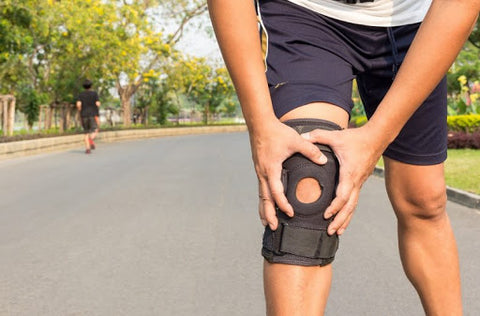
If your main question is "Which gives better pain relief: a knee brace or a knee sleeve?”
A knee brace works better when:
You have ligament injuries (ACL, MCL, PCL, LCL)
Your knee feels unstable or “gives out”
You are recovering from surgery
You need structural support
A knee sleeve works better when:
You have mild pain or swelling
You just need comfort during workouts
You deal with conditions like tendonitis, patellofemoral pain, or early arthritis
You want something lightweight and easy to move with
| Purpose | Knee Brace | Knee Sleeve |
|---|---|---|
| Best for | Injuries, instability, recovery | Mild pain, swelling, exercise |
| Support level | High | Light |
| Material | Hinges, straps, rigid frames | Soft compression fabric |
| Movement | Restricts harmful motions | Allows full motion |
| Weight | Heavier | Lightweight |
This is where understanding knee brace and knee sleeve differences becomes most important your condition decides which one works best.
Here’s a simple breakdown to help you decide:
Your knee feels unstable
You recently injured your knee
You need medical-grade support
A doctor or therapist recommended one
You want mild support for workouts
You have light soreness or swelling
You want something comfortable for daily use
You need compression, not restriction
If you’re still unsure, a knee sleeve is often a safe starting point unless a healthcare provider tells you otherwise.


If you’re leaning toward a knee sleeve, especially for running, lifting, or dealing with mild knee discomfort, compression sleeves are one of the best choices.
You can explore high-quality performance knee sleeves at Doc Miller Sports, known for compression products designed for active people.
Check out options that offer durable, breathable compression here: Doc Miller Sports Compression Collections.
1. Which is better for knee arthritis?
A knee sleeve is usually enough because it reduces swelling and provides warmth.
2. Can I wear a knee sleeve all day?
Yes, as long as it’s comfortable and not overly tight.
3. Can I use both?
Yes, but not at the same time. People sometimes use a brace during injury recovery and a sleeve afterward for training.
Disclaimer: This article should not be construed as medical advice. Please contact a licensed physician for a proper diagnosis of your specific case.
Find your perfect fit
Medical-grade compression sleeves and socks, made for everyday comfort. Free shipping within the USA.
Inner-thigh chafing can make everyday activities uncomfortable. Whether you are walking long distances, running, working out at the gym, or...

Crowded or overlapping toes can make something as simple as putting on socks and shoes uncomfortable. When one toe crosses...

Volleyball places considerable demands on the ankles. Players constantly jump, land, change direction, shuffle across the court, and move quickly...

