
Compression Socks vs TED Hose: Key Differences
When it comes to leg health, the debate around compression socks vs TED hose is common and for good reason. While both are designed to improve circulation and reduce swelling, they’re made for very different situations. Compression socks are built for everyday movement, exercise, and long hours on your feet, while TED hose are medical garments intended for bedridden or post-surgical patients. Knowing which one to use matters, because wearing the wrong option can reduce effectiveness or even cause discomfort. Below, we’ll break down how they work, how they differ, and when each one makes the most sense.
What Are Compression Socks?

Compression socks are elastic socks designed to improve blood flow in the legs by applying graduated pressure, tightest at the ankle and gradually decreasing up the leg. This pressure helps veins move blood back toward the heart more efficiently.
They’re commonly used by:
-
People who stand or sit for long periods
-
Travelers on long flights
-
Athletes during training or recovery
-
Individuals with mild swelling, fatigue, or circulation issues
Compression socks come in various styles (knee-high, thigh-high, toeless), colors, and compression levels, making them suitable for daily wear.
What Are TED Hose?
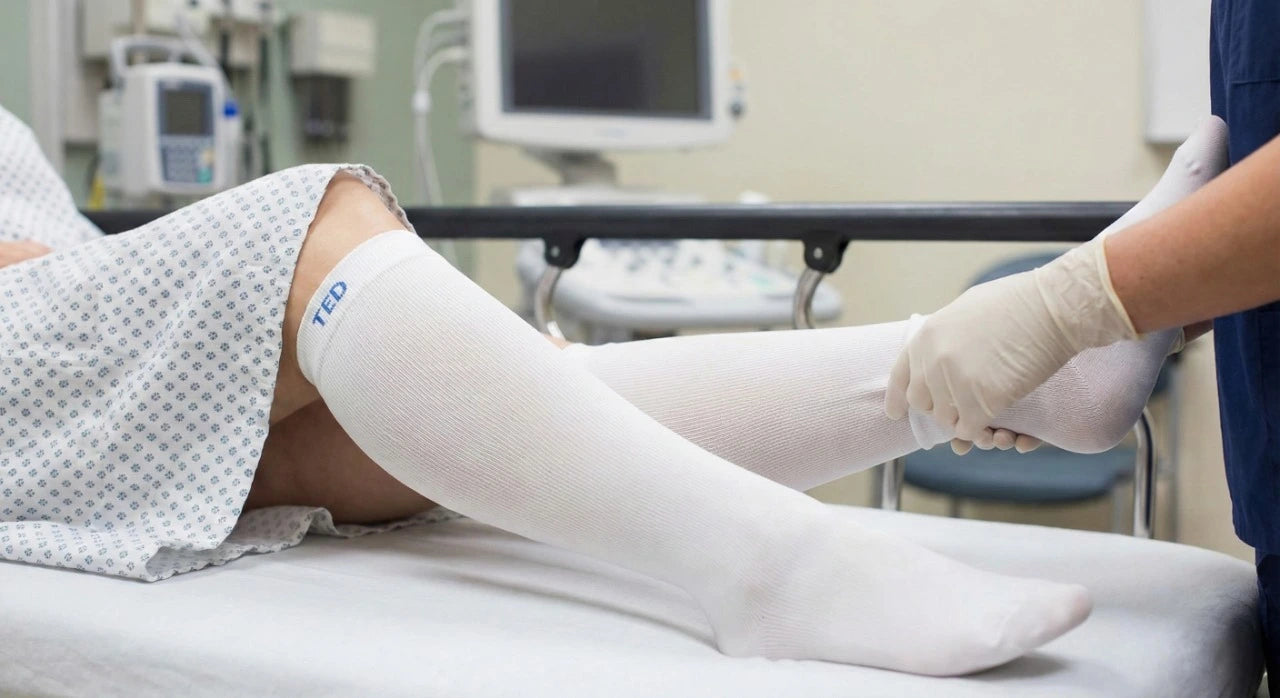
TED hose (Thrombo-Embolic Deterrent hose) are medical-grade compression stockings primarily used in hospitals or clinical settings. Their main purpose is to prevent blood clots in patients who are immobile, such as those recovering from surgery or confined to bed.
Key characteristics include:
-
Designed for non-ambulatory (inactive) patients
-
Usually white with an inspection hole under the foot
-
Lower compression compared to most daily compression socks
Unlike regular compression socks, TED hose are not meant for walking or exercise.
Compression Socks vs TED Hose – Comparison
| Feature | Compression Socks | TED Hose |
|---|---|---|
| Intended Use | Daily activity, work, travel, sports | Bedrest, post-surgical recovery |
| Activity Level | For walking & movement | For lying down or minimal movement |
| Compression Strength | Mild to strong (10–30+ mmHg) | Light (around 8–18 mmHg) |
| Design Options | Various styles & colors | Basic medical design |
| Where Used | Home, work, travel, fitness | Hospitals & clinical care |
Key Differences Between Compression Socks and TED Hose
Intended Use and Medical Purpose
The biggest distinction in compression socks vs TED hose is their purpose. Compression socks are meant to support active circulation, while TED hose are specifically prescribed to prevent deep vein thrombosis (DVT) in immobile patients.
Activity Level Requirements
Compression socks require movement to work effectively. TED hose, on the other hand, are designed for people who are mostly lying down and should not be worn during active walking.
Compression Levels and Pressure Distribution
Compression socks usually provide stronger, more targeted graduated pressure, while TED hose offer lighter compression suitable for resting circulation.
Fit, Sizing, and Comfort
Compression socks are sized for comfort during long-term wear, often using calf and ankle measurements. TED hose require precise medical sizing and can feel uncomfortable if worn incorrectly or for extended daily activity.
When To Choose Compression Socks?
Compression socks are the right choice if you:
-
Stand or sit for long hours at work
-
Travel frequently
-
Experience leg fatigue, swelling, or heaviness
-
Want everyday circulation support
They’re ideal for daily routines and active lifestyles.
When To Choose TED Hose?
Choose TED hose if:
-
You’re recovering from surgery
-
You’ve been advised to stay in bed
-
A medical professional recommends them
-
You have very limited movement
These are typically used short-term under clinical guidance.
Can You Use TED Hose Instead of Compression Socks?
In most cases, no. TED hose aren’t designed for walking or regular daily activity. Using them instead of compression socks can reduce circulation benefits and may even increase discomfort. If you’re active, compression socks are the safer and more effective option.
Recommended Compression Socks for Everyday Support
For everyday wear, many people look for compression socks that balance support, comfort, and durability. Doc Miller Sports offer compression socks designed for daily use, work environments, and travel. Their focus on breathable materials and consistent compression makes them a practical choice for people who want reliable leg support without a medical look or feel.
Frequently Asked Questions
1. Can I wear TED hose while walking?
It’s not recommended. TED hose are designed for bedrest and may not provide proper support when walking.
2. Do compression socks require a prescription?
Low to moderate compression socks usually don’t. Higher medical-grade compression may require professional guidance.
3. Which is better for swollen legs?
For daily swelling caused by standing or sitting, compression socks are usually more effective than TED hose.