
As men get older, keeping their legs comfortable and active can become increasingly important. Long periods of sitting, standing, walking, traveling, or exercising may leave the legs feeling tired or swollen. This is one reason compression socks for older men have become a popular option for everyday leg support.
Compression socks are designed to apply gentle, graduated pressure to the legs. This pressure can help support blood flow and reduce fluid pooling in the lower legs. For men over 60, the right pair may be useful during daily activities, travel, exercise, or periods when they spend a lot of time on their feet.
However, not every compression sock is the same. Compression level, fit, length, material, and intended use all matter when choosing the right pair.
In this guide, we'll explain what to look for in compression socks for men over 60, how compression works, when they may be useful, and what to consider before wearing them.
Why Consider Compression Socks for Older Men?

As we age, maintaining comfortable movement becomes an important part of everyday life. Some older men experience occasional leg fatigue or swelling after sitting for extended periods, standing for hours, traveling, or participating in physical activities.
Compression socks work by applying pressure to the lower legs. Graduated compression is typically strongest around the ankle and gradually decreases higher up the leg. This design helps support the movement of blood back toward the heart.
For some men, this can make compression socks a practical addition to their daily routine.
Common reasons an older man may consider compression socks include:
- Spending long periods sitting at a desk or at home
- Standing for extended periods
- Traveling by plane or car
- Experiencing tired or achy legs
- Participating in walking or other exercise
- Dealing with occasional lower-leg swelling
- Wanting additional leg support during daily activities
It's important to remember that leg swelling can have many causes, including prolonged inactivity, venous problems, kidney disease, heart conditions, and other health issues. Compression socks can be useful in some situations, but they don't address the underlying cause of unexplained swelling.
Potential Benefits of Compression Socks for Men Over 60
1. They Can Support Healthy Leg Circulation
One of the primary reasons people wear compression socks is to support blood flow in the legs.
The graduated pressure can help encourage blood to move upward rather than remaining pooled around the lower legs. This can be particularly useful during periods of prolonged sitting or standing.
For an older man who spends several hours sitting, wearing an appropriately fitted pair may provide additional support throughout the day.
2. They May Help With Lower-Leg Swelling
Swelling in the feet, ankles, and legs can occur for many reasons. Sitting or standing for long periods can contribute to fluid buildup, while certain medical conditions can also cause edema.
Compression garments can help limit fluid buildup in some circumstances. Mayo Clinic notes that compression stockings or sleeves may help prevent additional swelling after existing edema has been appropriately addressed.
However, sudden, unexplained, severe, or one-sided swelling should not simply be treated by purchasing compression socks. It should be evaluated by a healthcare professional.
3. They Can Be Useful During Travel
Long periods of sitting during road trips and flights can contribute to leg and foot swelling.
Compression socks may help reduce lower-leg swelling during long-distance travel by applying pressure to the legs. Mayo Clinic notes that compression stockings can be used during long flights to help reduce swelling and lower-leg discomfort.
For men over 60 who frequently travel, compression socks can therefore be a convenient item to include in a travel bag.
It's also important to get up, move around when possible, and follow appropriate travel-health advice.
4. They Can Provide Support During Exercise
Many older men remain highly active through walking, hiking, cycling, gym workouts, and other forms of exercise.
Compression socks may provide supportive coverage during these activities. Some men also prefer wearing compression socks after exercise when they want additional lower-leg support.
However, compression socks should feel supportive rather than painfully tight. If they cause numbness, tingling, pain, skin discoloration, or worsening swelling, they should be removed and the fit or compression level should be reassessed.
5. They Can Be Helpful for Long Periods on Your Feet
An older man who works, volunteers, shops, travels, or performs household activities may spend much of the day standing or walking.
Because prolonged standing can contribute to leg fatigue and swelling, compression socks may be worth considering as part of a comfortable daily routine.
The key is choosing a properly fitted pair that matches the person's needs.
What Compression Level Is Best for Men Over 60?
One of the biggest mistakes is assuming that a higher compression level is automatically better.
It isn't.
Compression socks come in different pressure levels, and the appropriate level depends on the person's needs and health circumstances.
A commonly discussed range is 20–30 mmHg, which provides firmer compression than lighter support socks. This level may be appropriate for some people, but it should not automatically be considered the right choice for every man over 60.
Cleveland Clinic recommends consulting a healthcare provider before purchasing compression stockings and notes that stronger compression may require professional guidance depending on the situation.
For men who have existing circulation problems or medical conditions, asking a healthcare professional about the appropriate compression level is especially important.
What Does 20–30 mmHg Mean?
The term "mmHg" stands for millimeters of mercury and refers to the amount of pressure provided by the compression garment.
A 20–30 mmHg sock provides moderate-to-firmer compression compared with everyday support socks.
For men looking for dependable compression support, Doc Miller Sports offers compression socks and sleeves designed for everyday comfort and active lifestyles. Their 20–30 mmHg compression options can be considered by men who are looking for firmer compression for activities such as walking, travel, exercise, or spending long periods on their feet.
The important point is that the compression level should match the individual's needs. Older age alone doesn't mean a person automatically needs stronger compression.
What Should You Look for in Compression Socks for Older Men?
Choosing the right pair involves more than looking at the compression rating.
Proper Fit
Fit is one of the most important factors.
A compression sock should feel snug and supportive without causing pain, numbness, tingling, or significant discomfort.
The sock should also stay in place without rolling down or creating a tight band around the leg. Poorly fitted compression garments can cause problems rather than providing useful support.
Always follow the manufacturer's sizing instructions and measure the leg when required.
Comfortable Materials
Older men may prefer breathable, moisture-managing materials, especially if they plan to wear compression socks for several hours.
Look for materials that feel comfortable against the skin and are appropriate for the activity and climate.
If the socks are intended for exercise, breathability and moisture management may be particularly important.
Easy to Put On
Putting on compression socks can be more difficult than putting on ordinary socks because the material is designed to provide pressure.
This can be particularly challenging for older adults with reduced hand strength, limited flexibility, arthritis, or mobility limitations.
A few techniques can make the process easier. Mayo Clinic recommends putting compression stockings on carefully and notes that a stocking-donner device can help people who have difficulty grasping and pulling the garment.
Appropriate Length
Knee-high compression socks are a common choice because they focus compression on the lower leg.
Other compression garments extend higher up the leg. The appropriate length depends on why you're using compression and what a healthcare professional recommends when medical compression is involved.
Easy-Care Construction
If you plan to wear compression socks frequently, choose a pair that can withstand regular washing and use.
Inspect your socks periodically. If they become stretched, damaged, excessively loose, or begin to bunch and wrinkle, they may no longer provide the intended compression.
How Should Men Over 60 Wear Compression Socks?
For many people, compression stockings are easier to put on in the morning before significant swelling develops.
When putting them on:
- Make sure your legs and feet are dry.
- Turn the sock inside out up to the heel.
- Place your foot into the sock and position the heel correctly.
- Gradually pull the sock upward.
- Smooth out wrinkles and bunching.
- Make sure the top isn't folded or rolled down.
Mayo Clinic and NHS guidance emphasize avoiding wrinkles and bunching because improperly positioned compression stockings may become uncomfortable or create areas of excessive pressure.
Compression socks are generally intended for daytime use unless a healthcare professional specifically tells you otherwise. NHS guidance advises against wearing compression stockings to bed unless instructed by a doctor or specialist nurse.
When Should Older Men Wear Compression Socks?
There isn't one universal schedule for every person.
Depending on the reason for wearing them, an older man may choose compression socks during:
- Long flights or road trips
- Extended periods of sitting
- Long periods of standing
- Walking or exercise
- Busy days involving a lot of movement
- Activities where additional lower-leg support is desired
If compression socks have been recommended as part of treatment for a medical condition, follow the schedule provided by your healthcare professional.
Are Compression Socks Safe for Older Men?
For many people, compression socks are safe when properly fitted and appropriately selected. However, older men shouldn't assume that compression socks are suitable for everyone.
Extra caution is important if you have conditions affecting circulation or sensation.
Cleveland Clinic recommends discussing compression socks with a healthcare provider if you have peripheral artery disease, severe swelling, significantly reduced sensation, or certain other medical concerns.
Men with peripheral artery disease in particular should seek professional guidance before using compression therapy because compression may not be appropriate depending on the severity of the condition.
You should also stop using the socks and seek medical advice if you experience significant pain, numbness, tingling, skin discoloration, skin damage, or worsening swelling while wearing them.
When Should You Talk to a Healthcare Professional?
Compression socks can be useful, but they shouldn't be used to ignore unexplained symptoms.
Talk with a healthcare professional before using compression socks if you have a known vascular condition, significant circulation problems, severe or unexplained swelling, reduced sensation in your legs, or another medical condition that could affect your response to compression.
You should also seek medical attention for sudden or severe leg swelling, particularly when it occurs with symptoms such as chest pain or difficulty breathing.
The goal isn't simply to find the strongest compression sock available. It's to determine whether compression is appropriate and, if so, select the right type and level for your circumstances.
Choosing the Best Compression Socks for Men Over 60
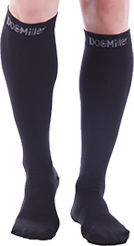
The best compression socks for a man over 60 aren't necessarily the most expensive or the tightest pair.
Instead, look for a combination of:
- Appropriate compression
- Correct sizing
- Comfortable materials
- A secure but comfortable fit
- A length suitable for your needs
- Easy application
- Durability
- A design appropriate for your daily activities
For everyday activities such as walking, traveling, exercising, or spending extended periods standing, a well-fitted compression sock can be a practical addition to an active lifestyle.
Doc Miller Sports is one option to consider when shopping for compression socks and sleeves, including 20–30 mmHg options designed for people looking for firmer compression and everyday leg support.
Ultimately, the right choice depends on your individual needs, comfort, and health situation.
Final Thoughts
Finding the right compression socks for older men doesn't have to be complicated.
For men over 60, compression socks may provide useful support during travel, exercise, long periods of sitting or standing, and other everyday activities. Graduated compression works by applying pressure to the legs, with the strongest pressure generally around the ankle, helping support the movement of blood back toward the heart.
The most important factors are proper fit, appropriate compression, comfort, and choosing a sock designed for the activity you have in mind.
If you have an existing medical condition affecting your circulation, sensation, heart, kidneys, or legs, talk with a healthcare professional before choosing compression therapy.
For healthy, active men over 60, the right compression socks can be a simple way to add comfortable support to an active daily routine.
Frequently Asked Questions
1. Are compression socks good for men over 60?
Compression socks may be useful for some men over 60, particularly during prolonged sitting, standing, travel, or exercise. They can support blood flow and may help reduce lower-leg swelling in appropriate situations. However, men with certain medical conditions should consult a healthcare professional before using them.
2. What compression level is best for older men?
There is no single compression level that is best for every older man. The appropriate level depends on the individual's needs and health. A 20–30 mmHg option provides firmer compression and may be appropriate for some users, but stronger compression should be selected with appropriate professional guidance when medical conditions are involved.
3. Can men over 60 wear compression socks all day?
Some people wear compression socks throughout the day, particularly when recommended for a specific purpose. They should be comfortable and properly fitted. Follow the manufacturer's instructions or your healthcare professional's recommendations, and remove them if they cause pain, numbness, tingling, skin changes, or worsening swelling.