

Best Thigh Sleeves for Chafing Prevention: What to Look For
Inner-thigh chafing can make everyday activities uncomfortable. Whether you are walking long distances, running, working out at the gym, or...
Cart
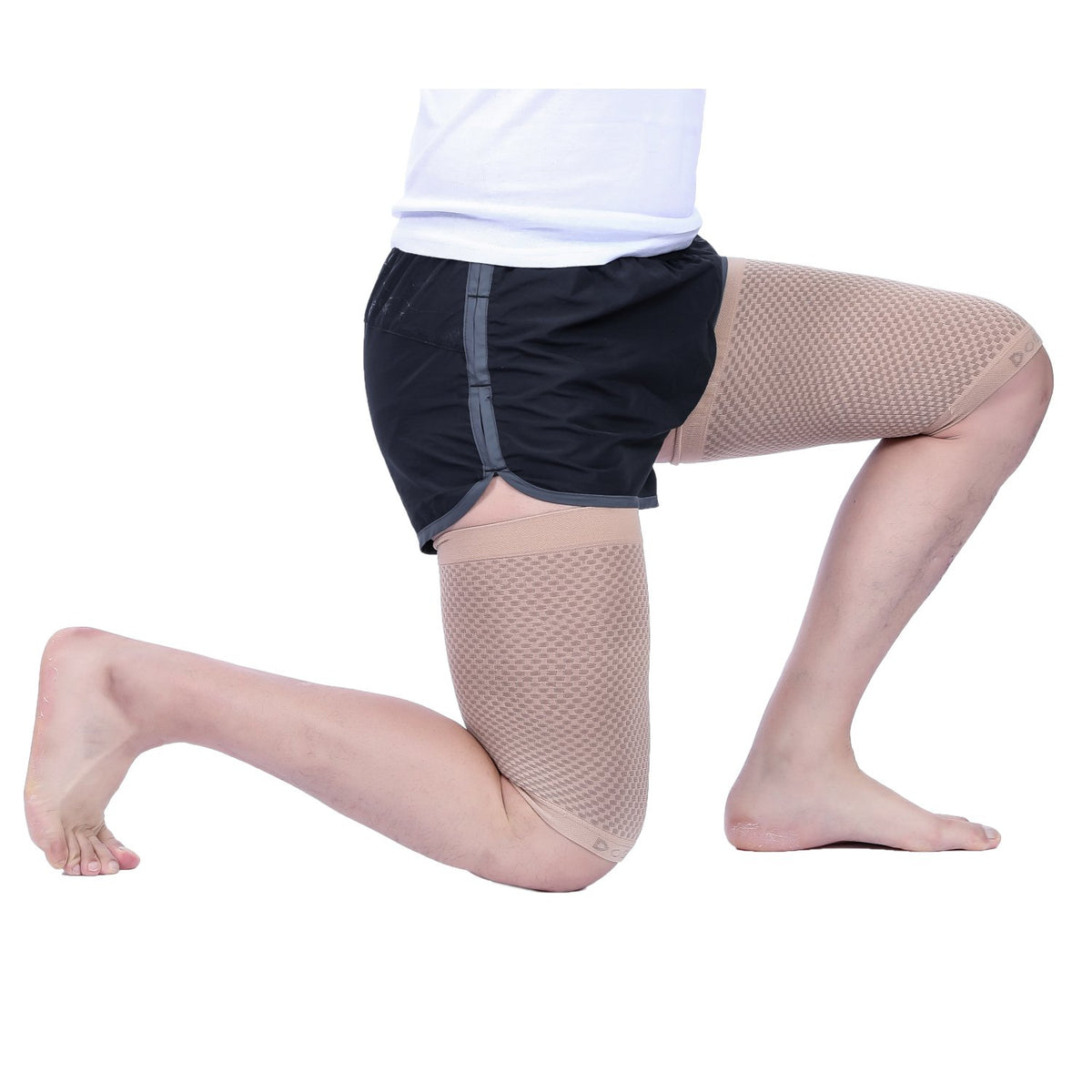
Skin/Nude / S

Figure skating demands a combination of balance, strength, flexibility, coordination, and precise movement. Whether performing jumps, spins, footwork sequences, or complex routines, skaters place considerable physical demands on their ankles and knees. These joints play an essential role in maintaining stability, absorbing landing forces, and controlling movement on the ice.
Repeated jumps, sudden changes in direction, deep knee bends, and demanding training sessions can place stress on the lower body. This makes choosing appropriate ankle and knee protection for figure skaters an important consideration for both recreational and competitive athletes.
Figure skating involves repetitive movements that place considerable demands on the lower extremities. The ankles help control balance and foot positioning, while the knees contribute to shock absorption, bending, extension, and stability.
Understanding how these joints work during skating can help athletes make more informed decisions about protective equipment.
Ankle strength and stability are essential for maintaining control on the ice. Skaters rely on their ankles when balancing on one foot, transitioning between edges, executing turns, and landing jumps.
Figure skating boots are designed to provide substantial ankle support. However, boot support does not eliminate every source of discomfort or guarantee protection against injuries.
Potential concerns include:
Ankle discomfort: Repetitive training, boot pressure, and prolonged skating may contribute to discomfort around the ankle.
Joint instability: Skaters with a history of ankle sprains may need an individually appropriate support strategy.
Swelling: Some athletes experience swelling after intense training or prolonged physical activity.
Friction and pressure: Poorly fitting boots, seams, or additional layers can create pressure points around the ankle.
Overuse: Repeated skating movements can contribute to irritation in the muscles, tendons, and surrounding structures.
Ankle supports and compression products may help address certain comfort and support needs. However, they should not replace properly fitted skating boots, appropriate technique, or professional assessment when symptoms persist.
The knees play an important role in almost every major figure skating movement. They bend during jump preparation, help absorb forces during landings, and contribute to control during spins and transitions.
Repeated loading can contribute to knee discomfort, particularly when combined with high training volumes, inadequate recovery, or changes in technique.
Common concerns include:
Knee soreness: Repetitive bending and jumping may contribute to discomfort.
Patellar discomfort: The structures around the kneecap can become irritated with repetitive loading.
Muscle fatigue: Tired quadriceps and surrounding muscles may affect movement control.
Impact-related discomfort: Falls and hard landings can result in bruising or other injuries.
Joint stiffness: Intensive training without sufficient recovery may contribute to stiffness.
Knee sleeves, compression supports, and protective pads serve different purposes. Understanding these differences is important when selecting knee support for figure skating.
There is no single product that works for every figure skater. The right choice depends on the type of activity, existing discomfort, injury history, desired level of support, and personal comfort.
Here are the main types of ankle and knee protection worth considering.

Ankle compression sleeves are lightweight supports designed to provide gentle, consistent compression around the ankle.
They are generally made from flexible materials that conform to the shape of the foot and ankle. Some designs extend around the heel and midfoot, while others provide coverage primarily around the ankle joint.
Potential benefits include:
Providing a snug, supportive feeling around the ankle.
Offering lightweight compression during everyday activities.
Helping some users manage mild swelling, depending on the product and individual circumstances.
Allowing greater flexibility than many rigid ankle braces.
Being relatively easy to wear under appropriate clothing.
What figure skaters should consider:
A compression sleeve should fit comfortably without creating excessive pressure. Check whether the material bunches around the ankle or creates uncomfortable seams inside the skating boot.
Skaters should also consider the thickness of the sleeve. A product that feels comfortable in regular athletic shoes may feel too bulky inside a tightly fitted figure skating boot.
Compression sleeves provide compression rather than rigid mechanical stabilization. They should not be treated as a substitute for a medically recommended brace when significant ankle instability is present.
Ankle braces are designed to provide varying levels of support and movement restriction.
Depending on their construction, they may feature adjustable straps, reinforced panels, supportive structures, or other stabilizing components.
Some designs are intended to help limit excessive ankle movement, which may be useful for individuals recovering from certain ankle injuries or managing instability under professional guidance.
Potential benefits include:
Providing additional support compared with basic compression sleeves.
Offering adjustable levels of compression or stabilization.
Helping restrict certain movements when appropriately selected.
Supporting rehabilitation plans when recommended by a healthcare professional.
What figure skaters should consider:
Not every ankle brace is suitable for use inside figure skating boots. Bulkier braces may interfere with boot fit, change pressure distribution, or restrict the ankle movement required for skating.
Before using an ankle brace on the ice, consult a qualified sports medicine professional or physical therapist and check compatibility with the boot manufacturer or a knowledgeable skate fitter.

Knee compression sleeves are among the more flexible options for athletes who want lightweight coverage around the knee.
Most are made from elastic materials that fit closely around the joint. Some feature additional padding or reinforced areas around the kneecap.
Potential benefits include:
Providing compression around the knee.
Offering a comfortable layer during warm-ups and training.
Helping some users feel more supported during movement.
Providing light coverage against minor surface contact.
Allowing flexibility for bending and straightening the knee.
For figure skaters, flexibility is particularly important. A sleeve should not interfere with deep knee bends, edge work, jump preparation, or landing positions.
A knee compression sleeve is not designed to prevent every knee injury. It also does not replace strengthening exercises or proper skating technique.

Knee braces come in different designs, ranging from simple elastic supports to more structured braces with adjustable straps, hinges, or patellar support features.
The appropriate design depends on the specific support requirement.
Potential benefits include:
Providing more structured support than a basic sleeve in certain designs.
Offering adjustable compression and fit.
Helping manage specific joint-support needs when recommended by a healthcare professional.
Supporting a prescribed rehabilitation or return-to-sport program.
What figure skaters should consider:
A bulky knee brace may restrict movement or interfere with the natural bending required for skating. Hinged braces can also create pressure points beneath tight skating clothing.
Skaters recovering from a knee injury should consult their healthcare provider before returning to jumps, spins, or other demanding movements.
Unlike compression sleeves and stabilizing braces, knee pads are primarily designed to provide cushioning against external impact.
They may be particularly useful during off-ice training, beginner skating lessons, practice sessions involving repeated falls, or conditioning activities performed on hard surfaces.
Potential benefits include:
Providing cushioning during falls.
Reducing direct contact between the knee and hard surfaces.
Offering additional comfort during certain off-ice exercises.
Providing a protective layer during appropriate training activities.
Traditional knee pads are not always practical for on-ice figure skating because they can be bulky and interfere with movement.
For on-ice use, skaters should choose equipment specifically intended for skating and follow their coach's and rink's safety recommendations.
Selecting knee support for figure skating requires more than choosing a product based on its appearance or compression level.
The best option should match the skater's physical needs while allowing natural movement.
Figure skaters need to bend and extend their knees repeatedly. They also perform movements that require balance, coordination, and controlled joint positioning.
A knee support that is too restrictive may interfere with these movements.
Look for a design that allows comfortable knee flexion and extension without slipping, bunching, or creating excessive pressure.
Different knee supports serve different purposes.
Light compression sleeves: Suitable for individuals looking for flexible compression and everyday comfort.
Patellar support designs: May suit people who need targeted support around the kneecap, depending on their condition.
Structured knee braces: May be appropriate for specific stability requirements under professional guidance.
Protective knee pads: Primarily intended for cushioning against external impact.
Choosing a more restrictive brace does not automatically mean better protection. The support should match the individual's needs.
Figure skating training can involve extended periods of physical activity. Wearing uncomfortable or poorly ventilated supports may lead to irritation and excessive sweating.
Consider materials that offer:
Breathable construction.
Moisture management.
Flexible compression.
Soft interior surfaces.
Durable stitching.
Comfortable skin contact.
A well-designed sleeve should remain comfortable throughout the intended period of use.
Sizing is essential for both comfort and function.
A support that is too tight may cause discomfort, skin irritation, or unwanted pressure. A loose support may slide down during movement and fail to provide the intended fit.
Always check the manufacturer's sizing chart rather than assuming your usual clothing size will be appropriate.
Measure the recommended area using the manufacturer's instructions. For knee sleeves, this may include measurements around the knee or at specified distances above and below the joint.
Figure skating clothing is often designed to fit closely to the body. Additional support should not interfere with movement or create uncomfortable friction.
For knee supports, consider whether the material fits comfortably underneath skating pants or leggings.
For ankle supports, check compatibility with the boot interior. Avoid adding thick layers that change how the boot fits or create localized pressure.
Ankle support requires particular attention because skating boots already provide a structured environment around the foot and ankle.
Adding an external support without considering boot fit can create more discomfort rather than solving an existing problem.
A thick ankle brace may not fit comfortably inside a figure skating boot.
Even a relatively small increase in material thickness can change the way the boot contacts the ankle.
Thin, flexible supports may be more practical for skaters who need light compression. More structured braces should only be used when their compatibility with the boot has been assessed.
An ankle support should remain in place without digging into the skin or creating excessive pressure.
Pay attention to areas around the ankle bones, heel, and top of the foot.
If the support causes numbness, tingling, increased pain, or changes in foot sensation, remove it and reassess the fit.
A skater who simply wants a comfortable compression layer has different needs from someone recovering from a sprain or experiencing recurring ankle instability.
Compression sleeves may be suitable for some general comfort needs, while more structured supports may be recommended for specific conditions.
Persistent pain, repeated ankle injuries, or difficulty bearing weight should be evaluated by an appropriate healthcare professional.
Never force an ankle support into a skating boot if it makes the boot feel unusually tight.
The boot should continue to provide an appropriate fit around the foot and ankle. If additional support changes pressure points or affects balance, consult a qualified skate fitter.
When comparing different support products, focus on the features that directly affect comfort, fit, and intended function.
| Feature | Why It Matters |
|---|---|
| Flexible construction | Allows natural movement during skating |
| Breathable fabric | Helps improve comfort during training |
| Moisture management | Helps manage sweat during extended use |
| Proper compression | Provides a secure fit without excessive pressure |
| Adjustable straps | Allow customization in products designed with adjustable support |
| Reinforced areas | May provide targeted support depending on the design |
| Non-slip construction | Helps prevent unwanted movement during activity |
| Low-profile design | Can improve compatibility with fitted skating equipment |
| Durable stitching | Helps the product withstand repeated use |
Not every product needs all these features. A lightweight sleeve and a structured brace have different purposes, so evaluate each according to its intended use.
Finding the right ankle and knee support for figure skating requires considering flexibility, comfort, proper sizing, and compatibility with skating boots.
If you're exploring different support options, take a look at the ankle and knee products available at Doc Miller Sports. Compare the available designs and features to determine which options may suit your individual support needs.
Whether you're looking for lightweight compression, additional knee support, or ankle products for everyday athletic activities, reviewing the available product specifications can help you make a more informed decision.
When shopping, consider:
The type of support you need.
The product's material and construction.
Available sizing options.
Whether the design allows comfortable movement.
Whether the product is appropriate for your intended activity.
Any compatibility requirements with your skating equipment.
Explore Doc Miller Sports to compare available ankle and knee support products and find options that align with your comfort and support preferences.
Figure skating places demanding physical requirements on the ankles and knees. From jump landings and spins to footwork and off-ice conditioning, these joints contribute to the balance, control, and movement needed throughout a skating routine.
Choosing appropriate ankle and knee protection for figure skaters starts with understanding the differences between compression sleeves, stabilizing braces, and protective padding.
Prioritize comfortable materials, correct sizing, flexibility, and compatibility with skating boots. Most importantly, select support products based on your individual needs rather than assuming that more compression or a more restrictive brace will provide better protection.
With appropriate equipment, proper training, good technique, and sufficient recovery, skaters can make more informed decisions about supporting their lower-body comfort and training needs.
Explore Doc Miller Sports to compare available ankle and knee support products and find options worth considering for your athletic routine.
Knee support is not necessary for every figure skater. Some athletes may prefer compression sleeves for comfort, while others may require a more structured support following an injury or under professional guidance.
Proper strength training, technique, equipment fit, and recovery remain important regardless of whether a knee support is worn.
Some skaters may find knee compression sleeves comfortable during training. However, the sleeve should allow unrestricted bending and extension and should not slip, bunch up, or cause irritation.
Check the manufacturer's recommendations and test the fit during low-intensity activity before using it during demanding training.
Some ankle braces may be unsuitable for figure skating boots because their additional thickness can create pressure points or change the boot's fit.
Slimmer supports may be more practical for certain skaters, but suitability depends on the product and individual boot design. Consult a qualified healthcare professional and skate fitter before using a structured brace on the ice.
Find your perfect fit
Medical-grade compression sleeves and socks, made for everyday comfort. Free shipping within the USA.
Inner-thigh chafing can make everyday activities uncomfortable. Whether you are walking long distances, running, working out at the gym, or...

Crowded or overlapping toes can make something as simple as putting on socks and shoes uncomfortable. When one toe crosses...

Volleyball places considerable demands on the ankles. Players constantly jump, land, change direction, shuffle across the court, and move quickly...

Best Open Toe Compression Socks for Hotel Housekeepers
Working in a hotel often means spending most of the day on your feet. Whether you're cleaning guest rooms, changing bed linens, vacuuming carpets, restocking supplies, or preparing rooms for new a...
Read more
Best Elbow Sleeves for Pickleball: Finding the Right Support
Pickleball is an enjoyable way to stay active, improve coordination, and spend time with friends. However, the repetitive movements involved in playing can put considerable strain on the muscles...
Read more